Evaluating the I Don’t Give a Donkey Mouse Cowboy PNG for Modern Print-on-Demand Projects
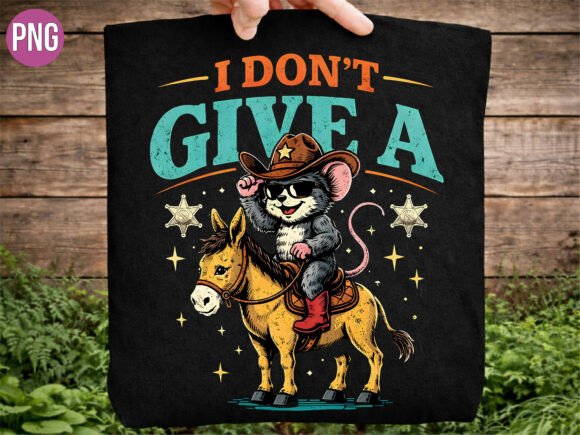
In the rapidly expanding world of digital crafting and print-on-demand (POD) entrepreneurship, the quality of your source assets often determines the success of your final product. Designers, small business owners, and hobbyists are constantly searching for graphics that balance humor, technical precision, and broad appeal. One such asset gaining attention is the I Don’t Give a Donkey Mouse Cowboy PNG. This specific design merges whimsical character art with a popular colloquial phrase, creating a niche yet versatile graphic suitable for various merchandise.
However, simply finding a funny image is not enough for professional results. Understanding the technical specifications, licensing implications, and comparative advantages of high-resolution digital files is crucial. This article explores what makes this specific PNG file distinct, how it compares to other digital formats, and when it represents the optimal choice for your creative workflow.
Understanding the Asset: More Than Just a Funny Image
The I Don’t Give a Donkey Mouse Cowboy PNG is not merely a clip-art snippet; it is a premium digital design file engineered for scalability and clarity. At its core, the design features a stylized mouse character dressed in cowboy attire, paired with a humorous pun. While the aesthetic appeal is subjective, the technical foundation is objective. The file is delivered as a ZIP archive containing a single PNG image with a transparent background.
For creators, the transparency is arguably the most critical feature. Unlike JPEGs, which carry a solid white or colored background, a transparent PNG allows the design to sit seamlessly on any substrate. Whether you are placing the graphic on a black t-shirt, a pastel mug, or a clear sticker, the edges remain clean without the need for manual editing or "white box" removal. This saves significant time in pre-press preparation, allowing designers to focus on layout and marketing rather than tedious photo manipulation.
Technical Specifications and Quality Standards
When evaluating digital downloads for commercial use, resolution is non-negotiable. The I Don’t Give a Donkey Mouse Cowboy PNG is provided at 300 DPI (dots per inch). To understand why this matters, consider the difference between screen display and physical printing. Screens typically render images at 72 DPI, which looks sharp on a monitor but appears pixelated and blurry when printed. A 300 DPI file ensures that the ink dots are dense enough to create smooth lines and sharp text, even on larger items like pillows or album covers.
Here is a breakdown of what users receive and why each detail matters:
- One ZIP File: Compressed for faster download speeds and organized storage. Users must extract the folder to access the content.
- High-Resolution PNG: Ensures crisp output for professional-grade printing.
- Transparent Background: Eliminates the need for complex masking or background removal tools.
It is important to note that this is a digital-only product. No physical item will be shipped. Buyers must ensure their design software supports PNG files before purchasing. Most modern programs, including Adobe Photoshop, Canva, Procreate, and Silhouette Studio, handle PNGs effortlessly, but verifying compatibility prevents frustration.
Comparing PNGs to Other Digital Formats
Why choose a PNG over an SVG or a JPEG? This is a common question among new designers. Each format serves a different purpose, and understanding these tradeoffs helps in selecting the right tool for the job.
PNG vs. JPEG
JPEGs are smaller in file size and ideal for photographs where slight compression artifacts are unnoticed. However, they do not support transparency. If you were to use a JPEG version of the cowboy mouse design on a dark-colored shirt, you would see an unsightly white square around the character. The I Don’t Give a Donkey Mouse Cowboy PNG avoids this issue entirely, making it superior for apparel and multi-colored backgrounds.
PNG vs. SVG
Scalable Vector Graphics (SVG) are mathematically based and can be resized infinitely without losing quality. They are excellent for cutting machines like Cricut or Silhouette. However, SVGs often require more technical knowledge to edit colors and layers. A high-resolution PNG, such as the one discussed here, offers a "what you see is what you get" simplicity. For users who prefer drag-and-drop workflows in platforms like Canva or who are printing directly rather than cutting vinyl, the PNG format is often more practical and less prone to rendering errors.
Ideal Use Cases and Product Applications
The versatility of the I Don’t Give a Donkey Mouse Cowboy PNG makes it suitable for a wide array of Print on Demand products. Because the design is self-contained and high-contrast, it performs well on items where detail retention is key.
Apparel and Textiles: T-shirts, hoodies, and tote bags benefit greatly from the transparent background. The humorous nature of the design appeals to casual wear markets, particularly for gifts or novelty items.
Hard Goods: Mugs, tumblers, and phone cases require high DPI to prevent blurriness on curved or glossy surfaces. The 300 DPI resolution ensures the text remains legible and the character details stay sharp.
Paper Products: Greeting cards, scrapbooks, and stickers are traditional uses for digital downloads. The playful theme fits well with birthday cards, friendship notes, or journal decorations.
Home Decor: Pillows and wall art can utilize the design as a focal point. When scaling up for larger decor items, ensure the original dimensions of the PNG are sufficient to maintain quality at the desired print size.
Limitations and Decision Factors
While the I Don’t Give a Donkey Mouse Cowboy PNG is a robust asset, it is not a universal solution for every design need. Creators should consider the following limitations before integrating it into their projects.
First, raster images like PNGs have a fixed maximum size. If you attempt to print this design on a massive banner or a full-size bedspread, the image may stretch beyond its native resolution, resulting in pixelation. Always check the pixel dimensions of the file against your intended print size. If you need infinite scalability, a vector format might be a better alternative, though it may lack the textured, hand-drawn feel of this specific PNG.
Second, color customization is limited compared to vector files. While you can adjust brightness or contrast in some software, changing specific elements (like the color of the cowboy hat) requires advanced editing skills. If your brand requires strict color matching or frequent variations, a layered PSD or AI file might offer more flexibility.
Finally, market saturation is a factor. Humorous animal puns are popular in the POD space. To stand out, designers should consider combining this graphic with unique typography, complementary patterns, or targeted marketing strategies rather than relying solely on the image itself.
Making the Right Choice for Your Project
Choosing the I Don’t Give a Donkey Mouse Cowboy PNG is a strategic decision for designers who value ease of use and immediate applicability. It is an excellent choice for those who:
- Need a quick, high-quality asset for standard-sized POD products.
- Prefer working with transparent backgrounds to simplify layering.
- Want to avoid the learning curve associated with vector editing software.
- Are targeting audiences who appreciate whimsical, humorous aesthetics.
Conversely, if your project involves large-format printing, complex color manipulation, or vinyl cutting, you may need to explore vector alternatives or supplementary tools. Ultimately, the value of this digital download lies in its balance of professional quality and user-friendly convenience. By understanding its strengths and limitations, creators can leverage this asset effectively to enhance their product offerings and streamline their design processes.